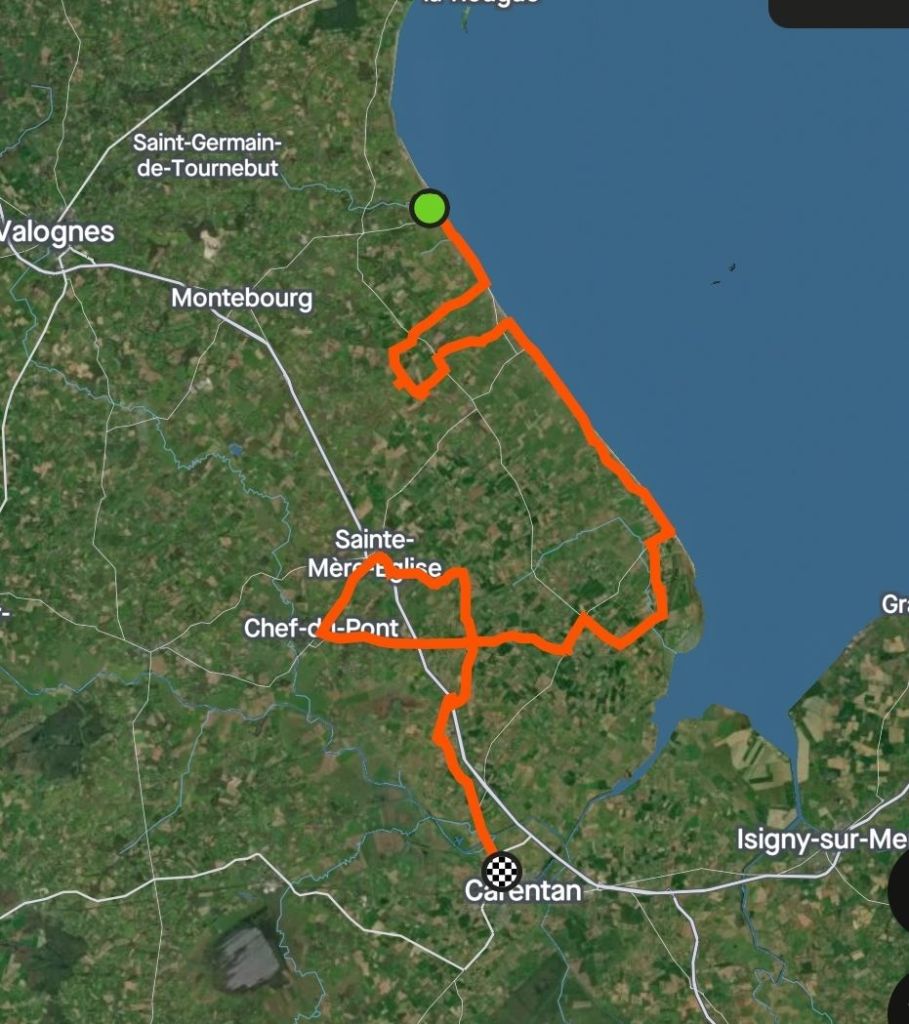
Quineville to Carentan 65km
Despite it being scorching hot in the day, there were a few light sprinkles of rain in the evening, and really heavy rain during the night. I think that helped me to a perfect night’s sleep! Got up about 7 to a fine morning and quickly got my standard touring breakfast of aeropress coffee, and porridge with honey and banana chips. You can cycle miles on this! I got away shortly after 8am and pedalled east following the coast. This was all the Utah beach landing zone for the American troops on D-day. There are still a surprising number of concrete bunkers lining the coast.
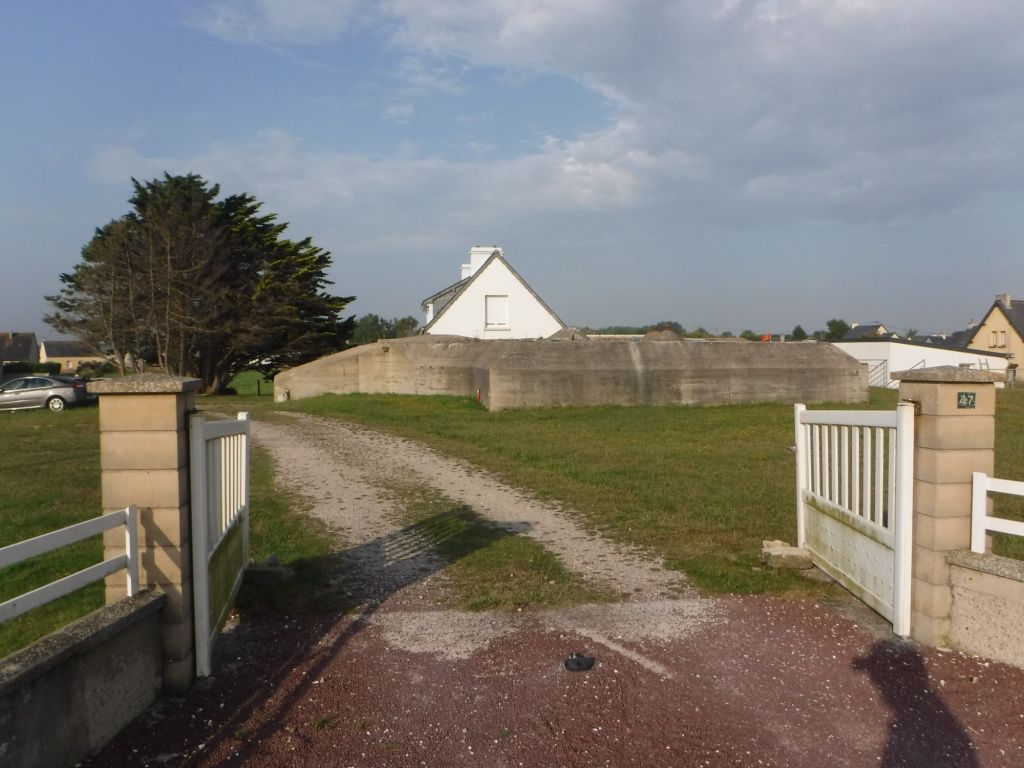
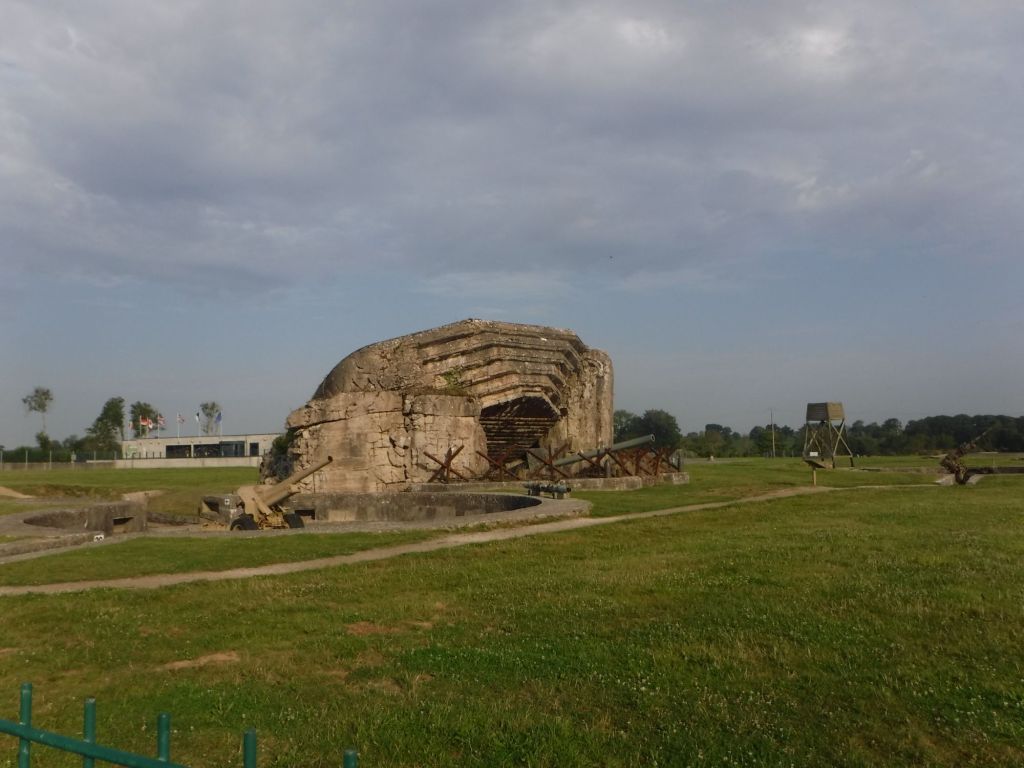
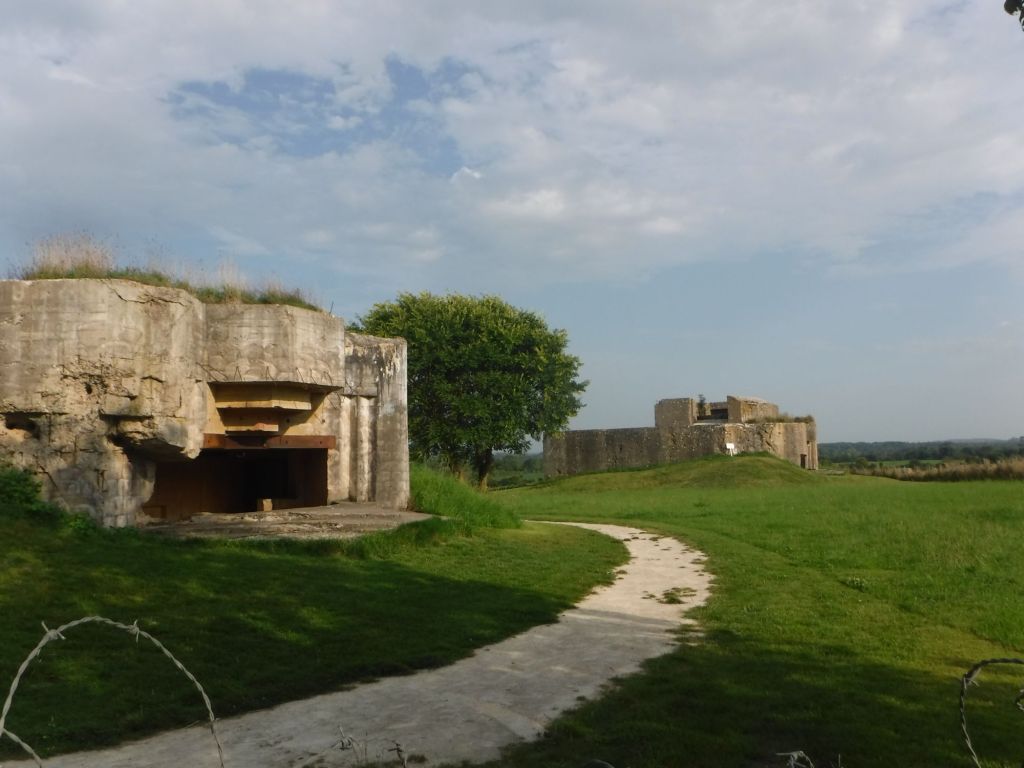
I took a road inland to the Crisbecq batteries, which are elevated on the high ground above the coast. They were huge chunks of concrete housing massive guns facing the sea. Close by was another, maybe bigger battery. 8 hard to think that these weren’t built specially because the Germans thought we would land here. They were built on the whole Atlantic coast line, from the top of Norway to the Spanish border, 1600 miles of coast.
Just in case you are getting bored with the history, now is the time to report I still had a slow puncture in my back tyre. I can’t believe it!! Pumping it up was getting me a few kilometres at a time but I knew I needed to stop and fix it. I chose a lovely bench on the sea front. I thought I might need sea water to find the puncture, and potentially to clean out more of the tubeless tyre sealant. In the end I found the hole easily, and the corresponding piece of wire that caused it. I don’t think it was in the tyre last night (it’s the problem with tubeless tyres – they can be full of thorns and stuff ready to puncture a tube straightaway), I did give it a good check. Although it does seem a bit unlucky to pick up a puncture within 5 kms!

I patched the tube and reinstalled the tyre. Here was where my problems started. I, somehow, mislaid the correct Allen key to put the back Thru Axle back in. It was one of the rather excellent Fixit sticks tools. I was stuck. I searched and searched and searched. Did it roll down the sea wall into the sand? Had a seagull stolen it when I wasn’t looking? I checked my photographs so I knew it had been on the sea wall. A search on all fours found it buried in dust near the table. Panic over. It all resulted in a strange experience afterwards. There were lots of squashed strawberries around the table, which I had walked and crawled through during the search, the old tyre sealant seems to consist of glitter and is very sticky. So it felt like I’d been in some extreme strawberry milkshake accident – the Barbie film came to mind for some reason.
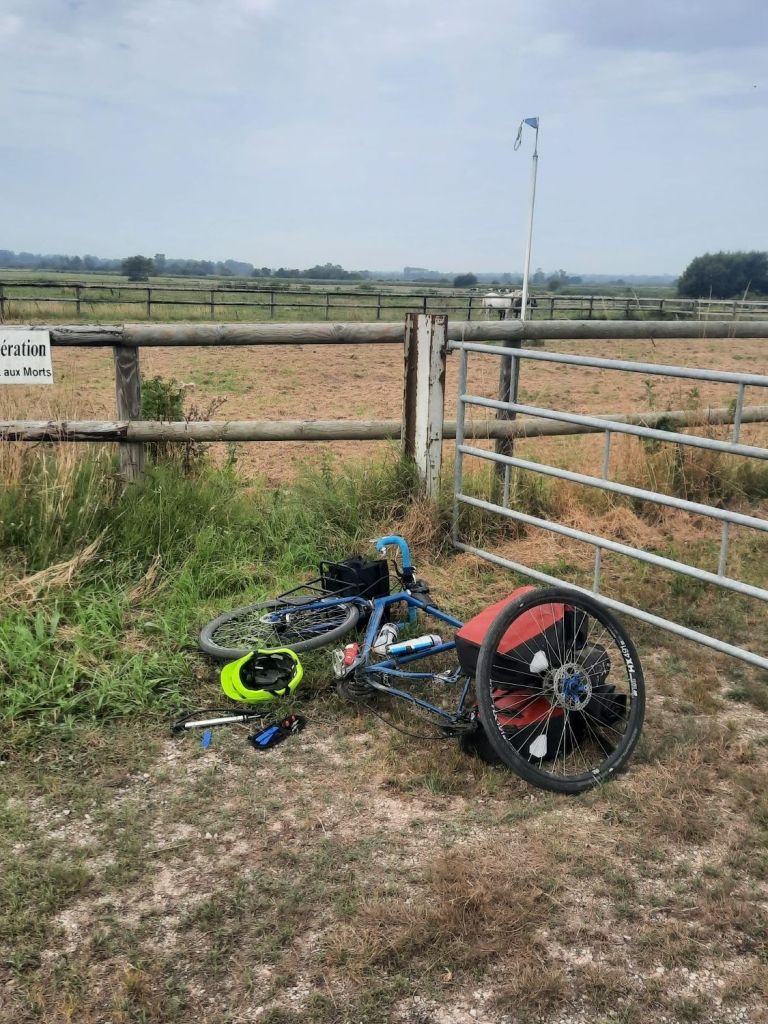
Anyway I won’t dwell on it, but the tyre went down again during a museum stop. I’ve fixed it now (touch wood) the first patch wasn’t applied well or not right over the hole, so air crept out. It took some finding. It wasn’t such a nice repair location with hidden stinging nettles, and I really stung my right hand – give me sticky glittery strawberries any time!
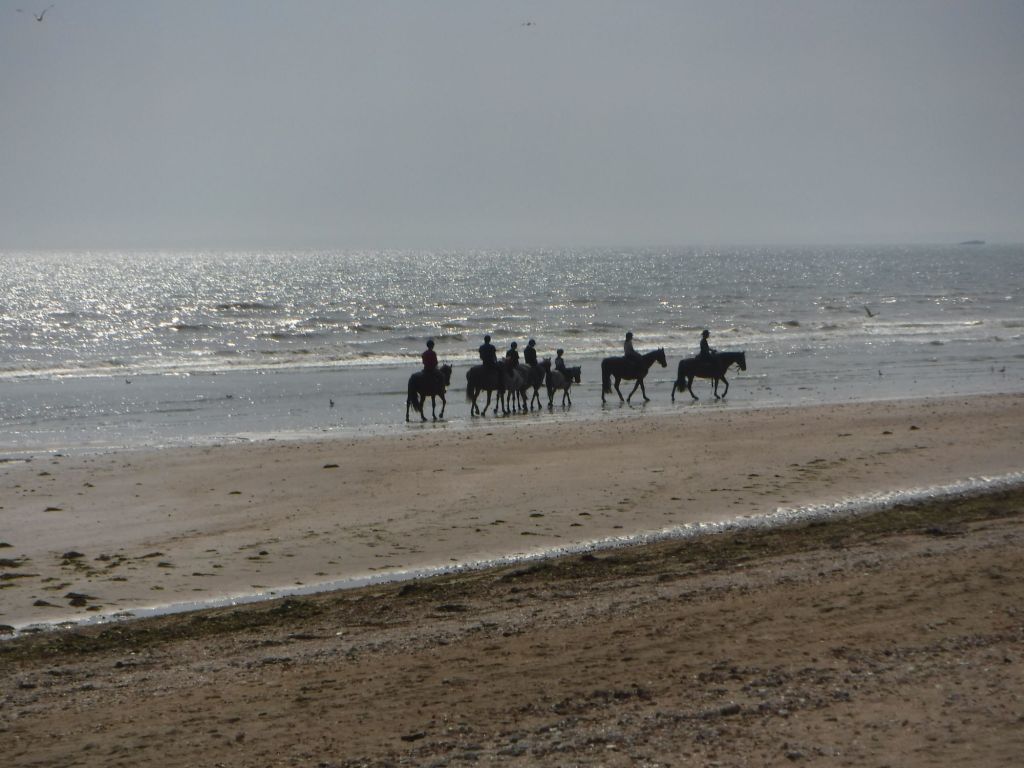
So onto the history. My first proper stop was memorials on Utah Beach. This was considered the first landing point. It also had a memorial to “Leclerc”. If you’ve been paying attention, the general with an assumed name. There was also a marker post which I’m sure I’ve seen before across France. This is marker post 0 km. They mark Leclerc’s “Road of liberation” from Utah Beach to Strasbourg over 1400km (I know I’m mixing my units!). This is clearly a really important monument as there were numerous children (army cadets?) who seemed to be cleaning each piece of gravel throughly. In the field next to the monument they were preparing for some form of re-enactment (well there was an old army tent and jeep parked out side. I think in a couple of days it will be swarming with old jeeps like I saw in the ferry.


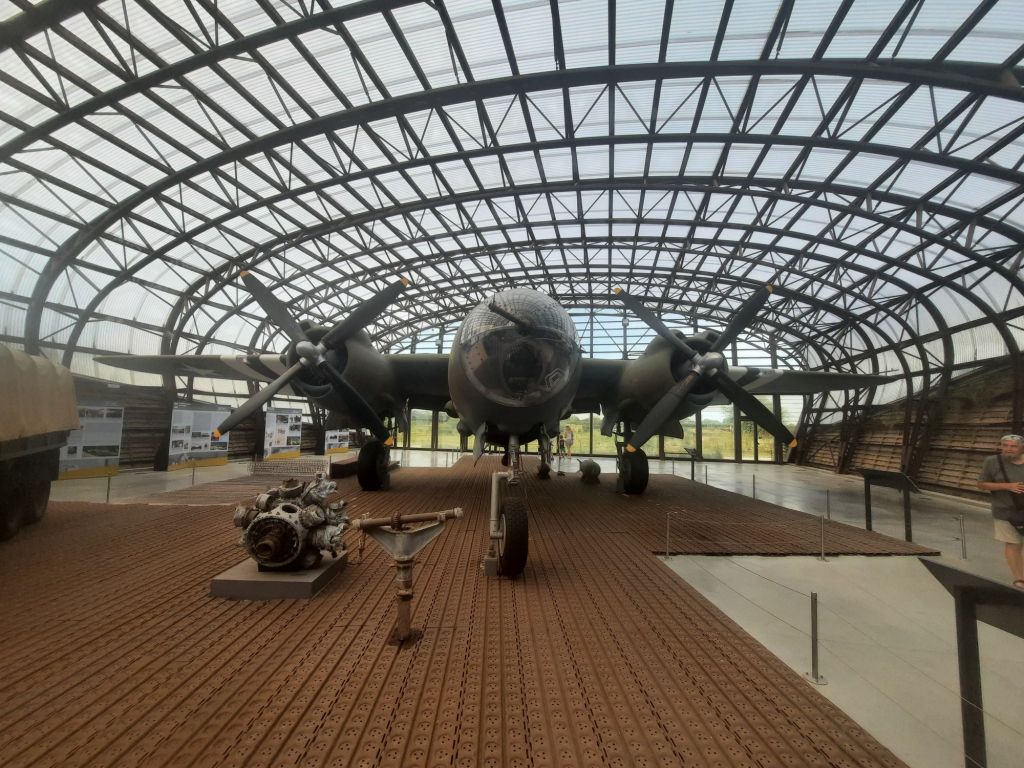
Next stop was the Utah Beach Landing museum. It was very good, but very busy. Its full of lots of information and artifacts. The best bit was the film about the landings, and the aircraft. The main thing I learnt was that the (cunning) Germans had flooded the Marsh behind the beach. So while I was cycling along thinking it didn’t look too bad, and once on the beach you could just head cross country. This wasn’t possible as there were only four roads that were above the flood level and they were well protected. This changed my view! The museum is modern (and popular!) really well integrated with the surroundings, and it was a nice surprise when you popped up in a gallery with commanding views over the beach.

I then cycled up to Sainte Marie du Mont, which professes to be the first community to be liberated. Later today I visit Sainte Mere Eglise, who claim the same! Anyway I just made lunchtime, with a bit of begging. The French are very strict on opening times! I quickly ordered a salad, water and a beer.

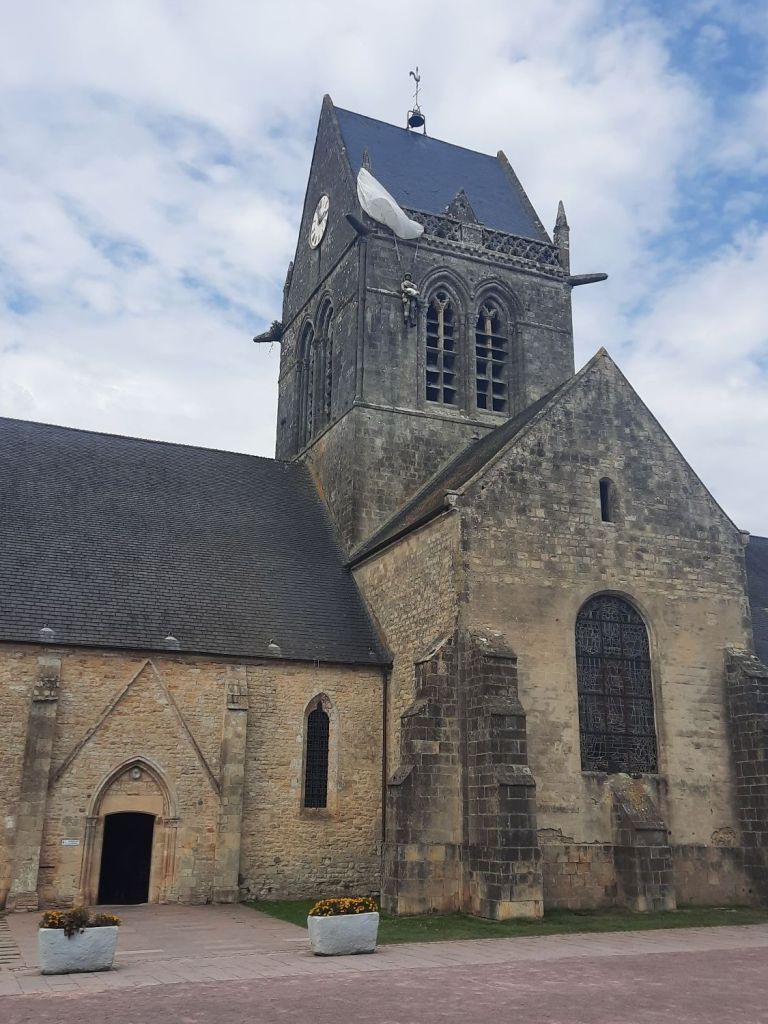
After lunch I headed to Saint Mere Eglise. This is in the middle of the area where the American airborne troops parachuted into. Although, after 80 years I think they should get the guy down from the church tower! It’s a really nice little town that is completely dominated by the Airbourne Museum.
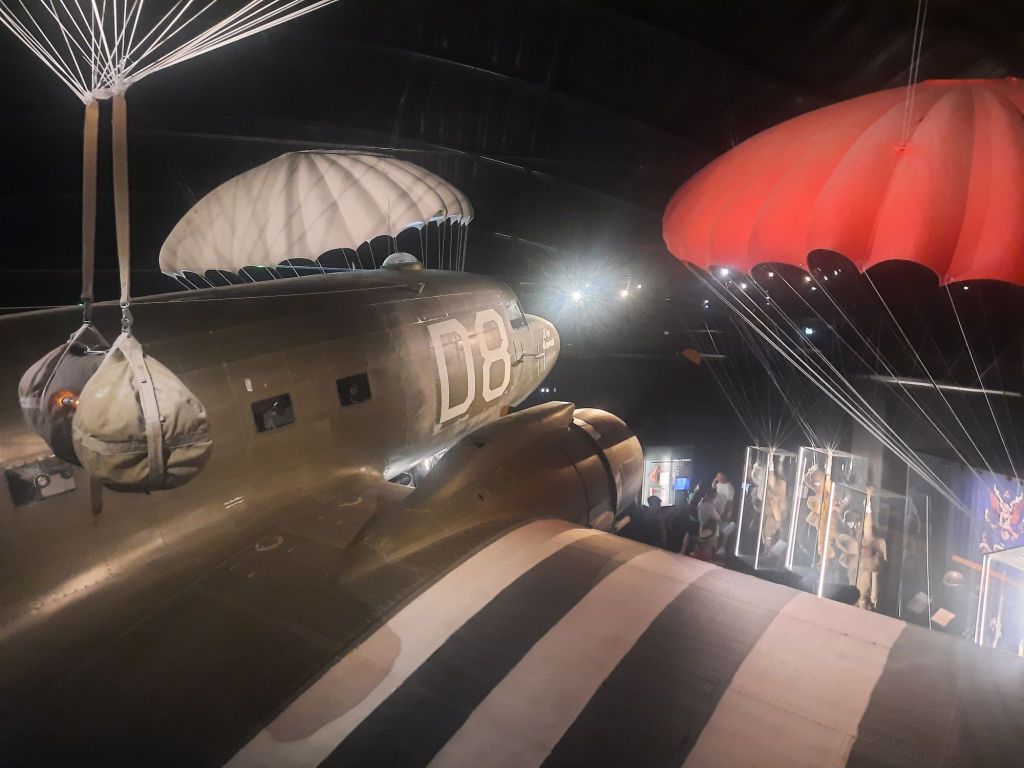
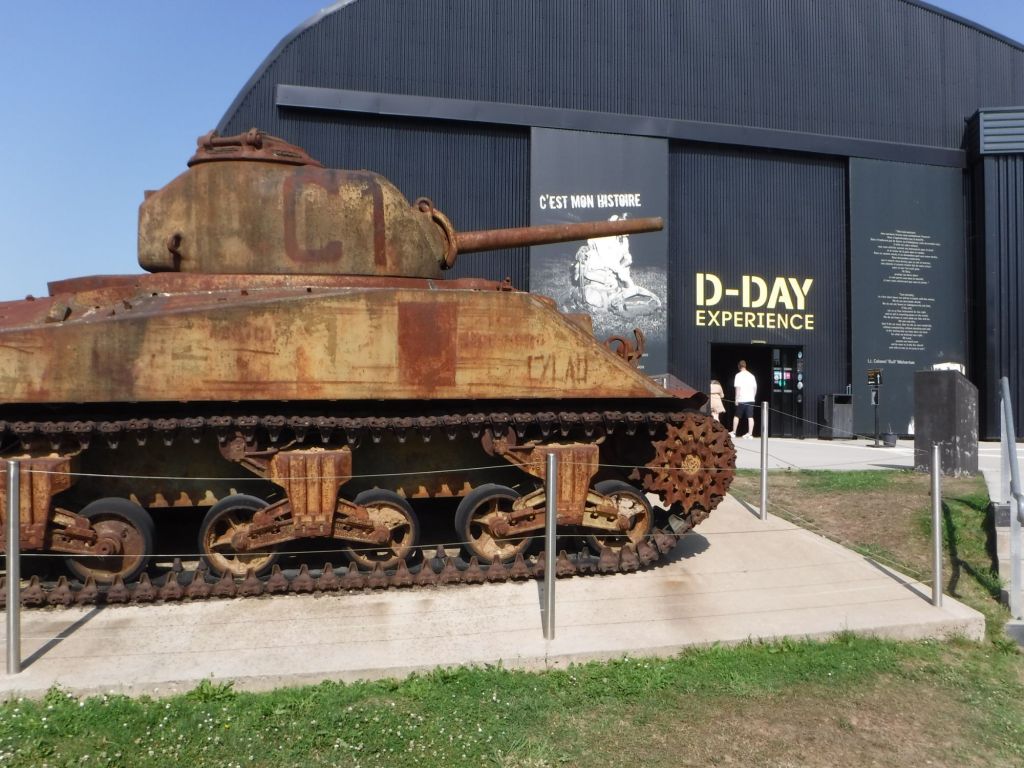
I have mixed feelings about the museum, initally it was pretty busy and you had a tablet you could scan points to see and read more. Neither of these things are my favourites. There are six buildings covering all aspects of D-day and the crowds soon dispersed. The best by far, and probably one of the best things I’ve experienced in a museum, was being on board the flight in with the troops, very intense, and then being outside the aircraft looking down to the fields. The lighting and sound made it, really well done.
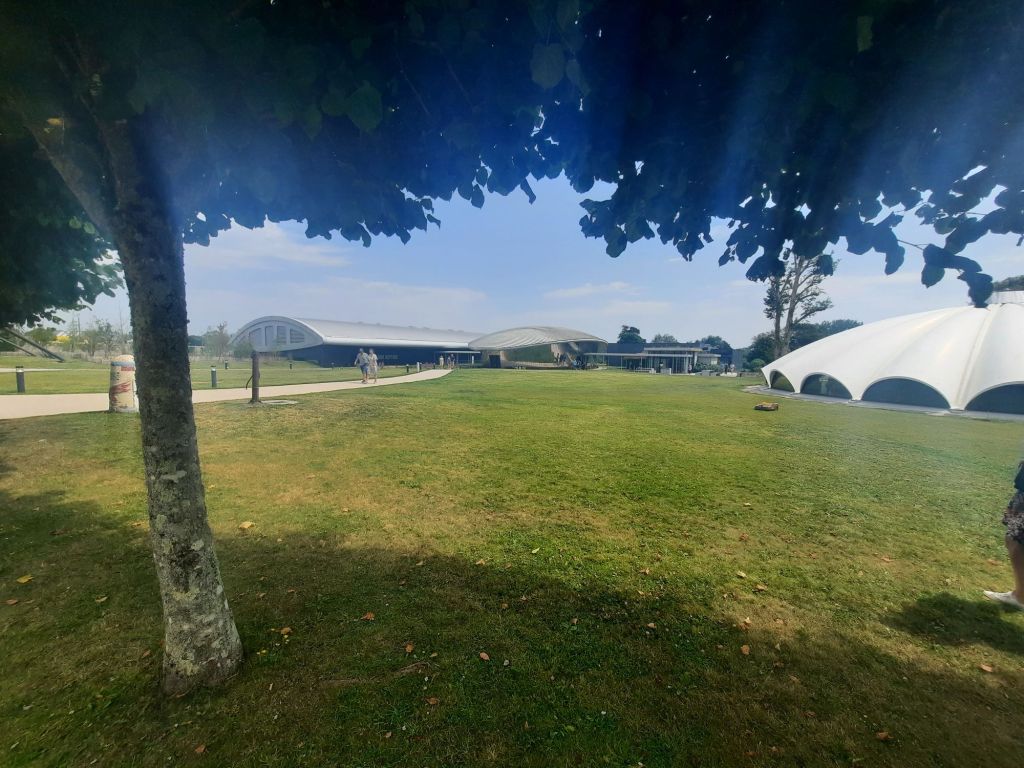
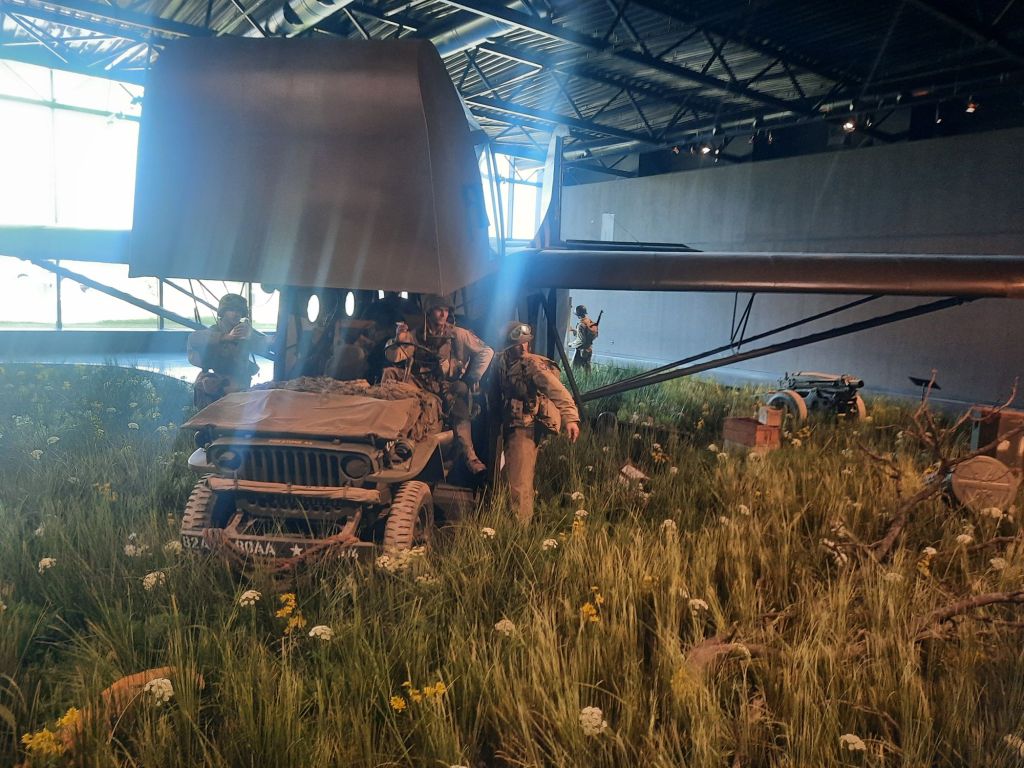
There was a whole exhibition building about the gliders. These have always fascinated me, as D-day is the only time I’ve heard that they were used. They were made by many companies (a bit like in covid) mostly in the US and shipped over. Imagine being towed across the channel in a wood and canvas glider made by the Steinway piano company!! From the films shown, it seems that a crash landing was almost inevitable. It was a crazy plan but it worked!
One other interesting thought was that General De Galle had to do loads of work convincing the French on either side of the channel, that the invasion wouldn’t just result in a change of the occupying force in France. He ensured that France would be free. I hadn’t really thought about it, but I was definitely a risk!
I cycled to Carentan to find a campsite and stopped at a Carefour supermarket for supplies (I saw the Lidl across the road first but decided as I was in France.. ). The campsite had a “Complet” sign, luckily there is always room to squeeze a cyclist in.

Just a simple tortellini this evening, but the French get a much better choice of fillings – even compared to Waitrose!!
 matt's travel & cycling blog